From a more human Pogačar to a Cavendish stage win, here are the top five things I want from the 2024 Tour de France.
1. Tadej Pogačar looking even vaguely human
Poggy’s extra-terrestrial Giro performance switched on my inner cynic and switched me off any tappa that looked like it might lean toward the GC ‘contest’. The Slovenian was untouchable, on a planet of his own, his ‘competitors’ impotent spectators to what we can only hope is generational greatness. At the Tour I’d most like to see him coming back down to earth a little, or for those below to rise toward his level – see number 2 below.
Being an old cycling cynic has ruined my enjoyment of Pogačar’s once-in-a-lifetime Giro d’Italia dominance.
It’s the final weekend of the 2024 Giro d’Italia and Tadej Pogačar owns the maglia rosa with a 10-minute lead on his nearest rival. He’s just won his sixth stage, and he did it at a canter that slowed to a trot.
Whilst the rivals he crushed looked alla frutta, as they say in Italy, he looked fresh as a bright pink daisy (a peony?). He rode up and down the line, casually chatting orders to teammates who were draped over the bars in abject suffering. He took a bidon from a soigneur and handed it to a child running roadside – what need for refreshment on an easy day out? The final few kilometres of the stage offered time to relax a little more, to wave and showboat for the adoring fans.
In the post-stage interview he was already thinking ahead to the Tour de France. For any other rider the Giro win would be the peak of the season, perhaps of the palmarès. For Pogačar it was a fun new way to prepare for July.
A season of unstoppable attacks
And it’s not just his Giro performance that dropped my jaw in disbelief. He’s been this way all season. At Strade Bianchi and Liege Bastogne Liege he announced in advance the exact points at which he would would launch his winning attacks. And when those attacks duly arrived, nobody could hold his wheel. Those that tried lasted barely 10 seconds before they blew, as if motor-pacing behind a throttle-happy soigneur who was late home for his dinner.
I should be enjoying this sporting spectacle. I should be like everyone else appears to be: entertained, in awe of this truly fantastical performance. Cycling has found a generational talent, a wunderkind turned superman. His Giro feat is cycling history, a ride for the ages, one we’ll look back on and ponder if we’ll ever see the likes again. I want to be part of the collective joy, and yet I can’t let myself go.
I’ve been burned and I’ve learned
I’ve been a cycling fan since the 1989 Tour de France. Over the decades I’ve been burnt and I’ve learned. Cycling has shown me enough that I don’t take it too seriously as a pure sporting event. It’s entertainment much as my other favourite, American football. I never let my sceptical guard down. I watch races mainly because I always have. It’s tradition, entertainment and, mostly, good fun. But it’s not real life.
Fignon was my first true, cycling love. I revelled in Riis’ toying with, and toppling of, Indurain. I was awed by the brute diesel power of the young East German Ullrich. I delighted in pure-climber Pantani’s poetic prowess. I cheered them on, each and every one, and each and every one either failed a doping test or later admitted their guilt. They weren’t the outliers either; they were dopers in a sport built on doping. By Tour win three of Armstrong’s seven I had come to accept that cycling was a case of ‘may the best doctor win’.
Mr 60 toys with Big Mig
But then, was it just me or did it not seem that cycling had reset? In recent years, despite increased speeds, the sport has somehow appeared a lot more believable. The relentless churn of scandal has certainly gone, the internet innuendo has died a death, and a new generation of fans cheer on their heroes with a clean conscience.
A racehorse among donkeys
So what is it about Pogačar and this year’s Giro that’s got me so vexed?
I realise the (still) young Slovenian has shown talent since he was a child. This is not some donkey turned racehorse, a la Froome. However, he’s a racehorse who’s just spent three weeks making 200 other professional athletes look like donkeys. He gave the impression of a pro who’s turned up to piss about at a local amateur race, showing off to the third-cats and juniors.
He’s won with an astonishing insouciance, clearly holding energy in reserve for the rest of the season. And he’s not the first rider to dominate his rivals, but at least Froome had the decency to look like he was turning himself inside out as he spun that silly oval chainring.
Not that Pogačar’s rivals seem to mind being so easily, breezily crushed. They all love him for it, and the more unbeatable he gets, the more they laugh in happy wonder. I’d say they love him in the way that puny kids laugh at the big bully’s jokes, but he seems genuinely likeable. “Poggy” they affectionately call him as they pick themselves up off the concrete, pick at scraps that have fallen from his table.
The men behind the man
But whilst he utterly dominates, there’s not even a hint of innuendo or suspicion – and I have none of my own to offer beyond a performance that fails the (non-WADA ratified) cynic’s eye test. Fans and the media alike accept that this is how it is, some kind of unnatural natural order. I might be able to accept it too if it didn’t look so utterly unbelievable.
Duval dream team
I might be able to if his team wasn’t run by Mauro Gianetti and Joxean ‘Matxin’ Fernandez – two men with a dark cycling history, responsible for bringing us the likes of Iban Mayo, Juan José Cobo, Leonardo Piepoli, and Riccardo Ricco. Doper, doper, doper, and doper.
Will the Tour be the cure?
Perhaps the Tour will settle my unease. Vinegaard, Roglic and Evenepoel will all be fully recovered. A four-way battle will ensue, Pogačar will show some signs of Giro fatigue and he’ll appear less of an outlier. Or, perhaps he’ll cruise through that one too, add yellow to pink and follow Contador’s advice and make a run (saunter) at La Vuelta’s maillot rojo.
Whatever happens next, it’s going to take me a long time to accept what I’ve seen at this year’s Giro. Perhaps I never will and that will mean missing out on enjoyment of this once-in-a-lifetime spectacle. I hope that’s the case.
Whilst cycling might have moved on from the bad old days, it’s undeniable that I’m still an old cynic. But it’s not my fault. Cycling made me this way.
We Rode All Day is a fictionalised account of the 1919 Tour de France, told from the riders’ perspective.
We Rode All Day is a work of fiction based on the historical fact of the 1919 Tour de France. Gareth Cartman has used historical archives, and sometimes artistic license, to conjure a ‘voice’ for each of the featured riders and then set their stories around the events of that year’s race.
The Yellow Jersey by Peter Cossins is a fitting commemoration of the 100th anniversary of one of sport’s most iconic prizes.
Conceived, and first worn, in 1919 as a means of helping spectators at the roadside more easily identify the Tour’s leading cyclist, the maillot jaune is one of the most coveted prizes in the sport of cycling, only rivalled by the World Champ’s rainbow bands.
It’s a long time since I last pinned a number to my cycling jersey. Back in my day (when MTB wheels were all 26 inches and fluro lycra wasn’t retro) I entered a lot of cross-country races. The only tactic I observed, with mixed to middling results, was to ride flat-out from start to finish. My only ‘glorious’ road-racing memory involves failing to ride my breakaway companions off my wheel on a climb, then leading out the sprint, ignoring my inner monologue, which was breathlessly shouting, “you shouldn’t be leading out, you shouldn’t be leading out!”
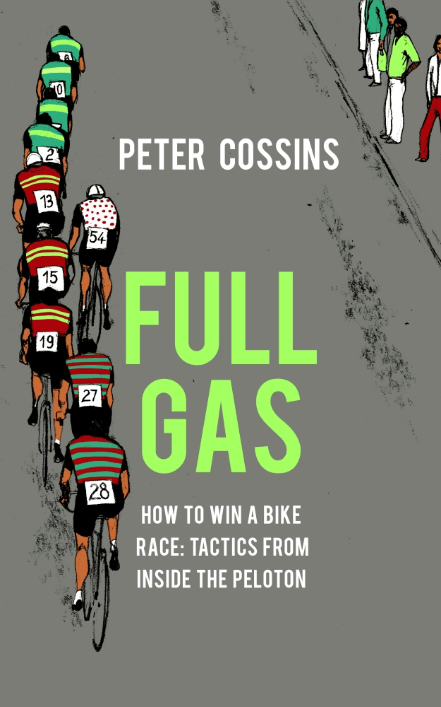
I have no immediate intention of returning to competitive ways and so picked up Full Gas – How to Win a Bike Race: Tactics From Inside the Peloton, to give it its full title, unsure if this book was really for me.
It didn’t take long for those doubts to be dispelled.
Butcher, Blacksmith, Acrobat, Sweep – The Tale of the First Tour de France by Peter Cossins (Yellow Jersey Press) is part explanation of how the world’s greatest bike race came into being, and part sporting reportage of the inaugural Grand Tour’s monstrous stages. There’s a lot of historical detail packed in here but, thanks to Cossins’ telling and the nature of the events being told, none of it makes for dull reading.
The Invisible Mile by New Zealand author David Coventry is a fictionalised account of the five Australian and New Zealand cyclists who, in 1928, formed the first English-speaking team to ride the Tour de France.
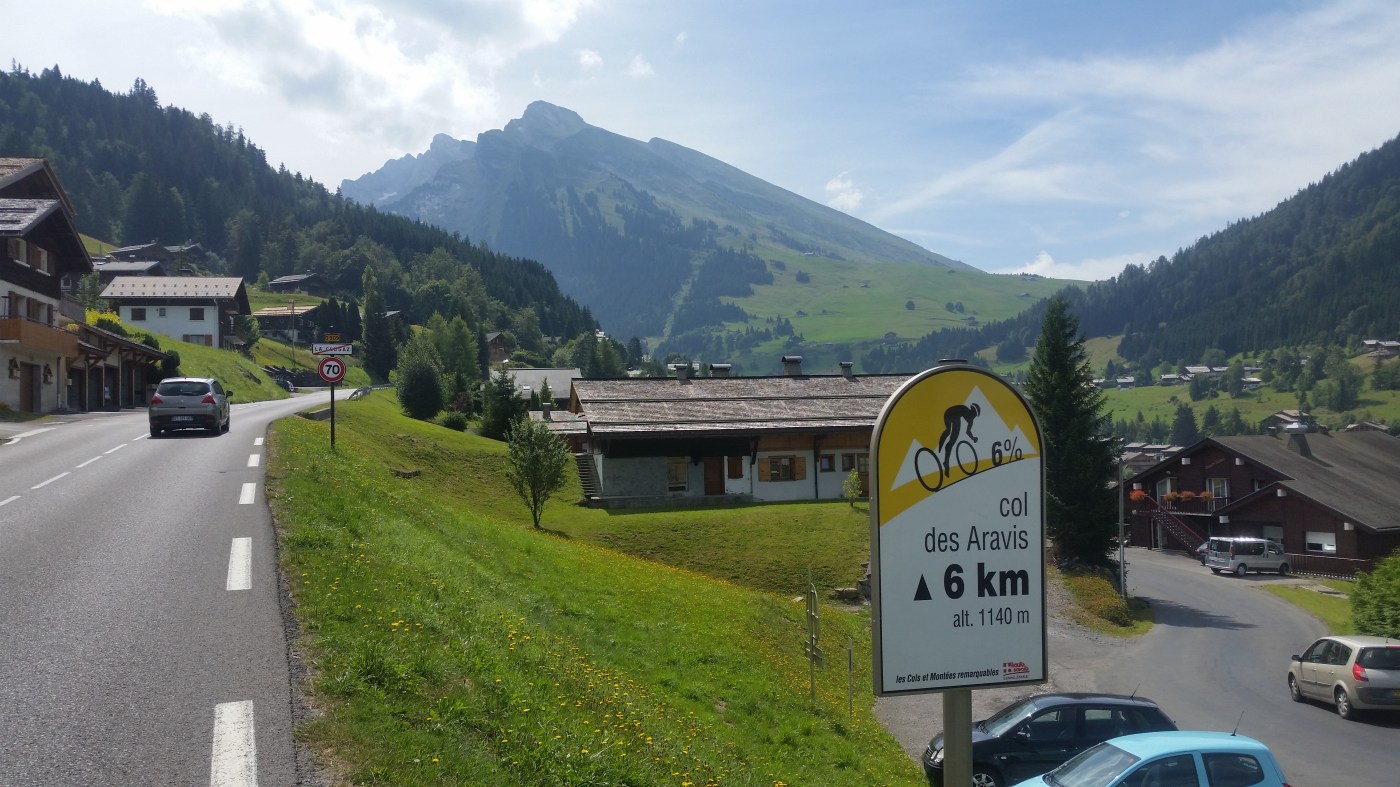
When it comes to spectacular TV shots of the Tour de France, forget yellow sunflower seas and the Champs Elysees, the mountains are where it’s at. And if you think they look good on your 58-inch HD, try them up close and personal. They’re dangerously distracting, I realised, braking hard as the hairpin bend turned abruptly to sheer drop.
I was in the Savoie Mont Blanc region of eastern, Alpine France, descending the Col de la Colombière, first tackled by the Tour in 1960. Its 16km ascent, particularly the last steep stretch into the headwind, had left me dazed.
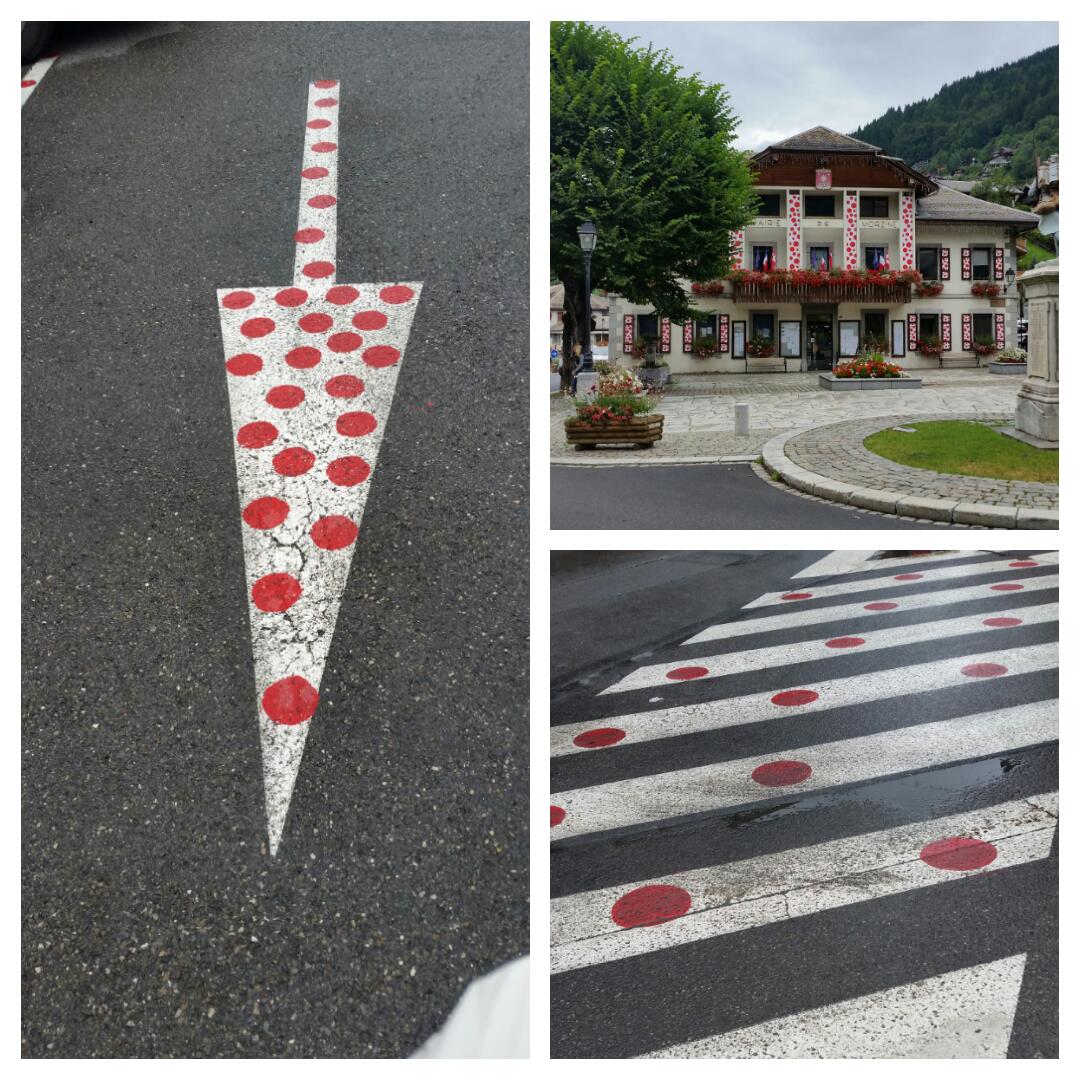
I’m recently back from a few day’s riding in the Savoie Mont Blanc, the lumpy, Alpine part of Eastern France that borders Switzerland and Italy. The area, hugely popular with winter skiers, is making a big push to promote its many mountainous delights to summer cyclists. Not that cyclists haven’t already discovered the place. I stayed in Morzine, which has already hosted 19 Tour de France stages, including this year’s Tour’s penultimate etape (the soggy stage won by Ion Izagirre’s demon descent off the Col de Joux-Plane). The locals clearly took the Tour to heart and a month on from the big event the whole area was still decked out in white with red polka dots to match the maillot a pois rouge worn by the race’s best climber.




 Rolf Rae-Hansen